Twenty-nine years ago this week, a Canadian singer released a ballad that almost didn't make it into the movie it was written for. The director of Titanic did not want a pop song anywhere near his tragedy, the singer did not want to record it and the composer had to sneak a demo past both of them. A few months later, "My Heart Will Go On" was the best-selling single of 1998 worldwide, with an Oscar on the way and four Grammys to follow. It is a song so familiar that it can be hard to hear, so let's slow down and listen to how it was built and why it still lands. Song Facts Artist Celine Dion Released November 24, 1997 (international single); early 1998 in the United States Album Titanic: Music from the Motion Picture and Let's Talk About Love (both 1997) Written by James Horner (music) and Will Jennings (lyrics) Produced by Walter Afanasieff, James Horner and Simon Franglen Recorded 1997, at the Hit Factory in New York and WallyWorld in San Rafael, Cal...
Some songs announce themselves with a voice. "Superstition" announces itself with a drumbeat and a keyboard that sounds like a rubber band being plucked by a machine. Within a few seconds, you know exactly what record you are hearing. That instant recognition is rare, and it is even rarer when you learn that Stevie Wonder, then just 22, wrote the song for somebody else, nearly let it go and only kept it because Motown refused to part with it. The result became his first No. 1 pop hit in almost a decade, won two Grammy Awards and gave funk one of its most imitated riffs.
Song Facts
| Artist | Stevie Wonder |
| Released | October 24, 1972 (single) |
| Album | Talking Book (Tamla, October 27, 1972) |
| Written by | Stevie Wonder |
| Produced by | Stevie Wonder, with associate producers Malcolm Cecil and Robert Margouleff |
| Recorded | 1972, Electric Lady Studios, New York City |
| Genre | Funk, soul |
| Length | 4:26 (album version); 4:07 (single version) |
| Peak Chart Positions | No. 1 US Billboard Hot 100; No. 1 US R&B (three weeks); No. 6 Canada; No. 11 UK |
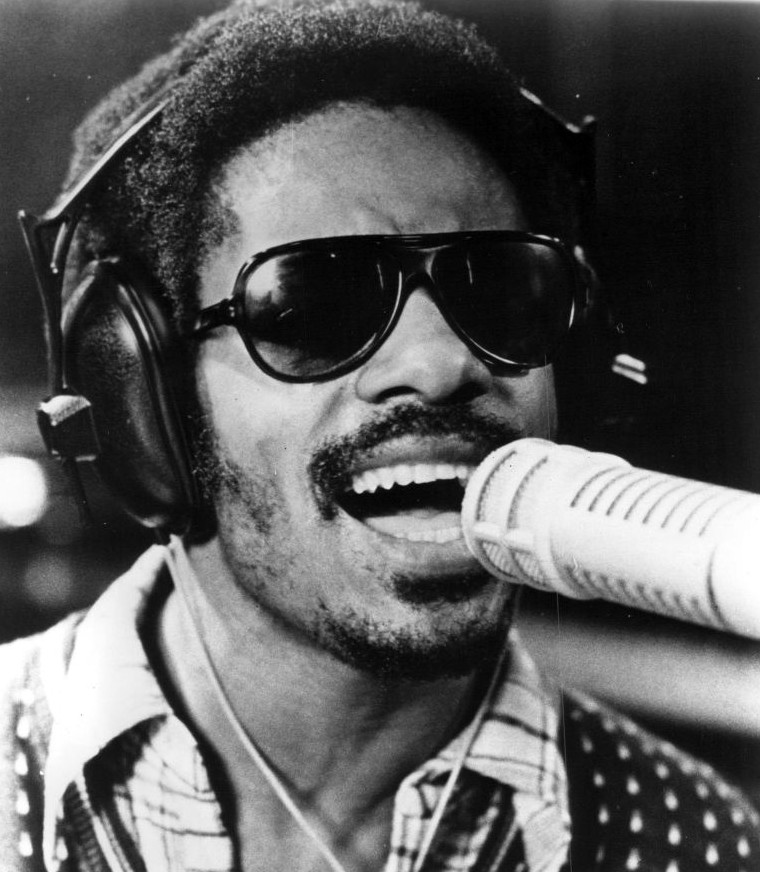
What the Song Is Really Saying
On the surface, "Superstition" is a catalog of folk omens. Wonder runs through the kinds of warnings people have passed down for generations: a shattered mirror that supposedly brings years of misfortune, a ladder that might come crashing down, the unlucky number thirteen and omens that seem scrawled across a wall. He delivers each one with a mix of amusement and urgency, as if he is listing the rules of a game he refuses to play.
The heart of the song arrives in the chorus and its closing lesson. Wonder argues that blind belief in things we do not understand only leads to suffering, and that fear-driven thinking is no way to live. He was not writing as a believer. In a 2000 interview with NPR, as reported by American Songwriter, he said he did not put stock in superstitions himself, and he framed the song as a caution against letting them take over.
Many listeners have heard more than a warning about black cats. Critic Robert Christgau, in his 1981 Record Guide, described the album as "hard-headed, hard-rocking political analysis," and it is easy to see why. Released in an election year, amid the Vietnam War and the long aftermath of the civil rights movement, the song's warning against irrational fear carried a wider message. Wonder rarely spelled out a single meaning, which lets the song work as both a playful jab at old wives' tales and a call for clear thinking in anxious times.
The music reinforces that tension. The groove is joyous and almost impossible to sit still through, yet the minor-key riff has a nervous, prowling edge. The horns, which enter about 49 seconds in, answer the clavinet like a crowd shouting back. It is a dance record that also wags its finger.
To read the full lyrics, listen on licensed services such as Apple Music or Spotify, which display synced lyrics, and visit Stevie Wonder's official website for more about his music.
The Story Behind the Song
In 1972, Wonder was riding a wave of new freedom. A year earlier, on turning 21, he had let his childhood Motown contract expire and negotiated a new deal that gave him far more artistic control. He used that freedom to make Talking Book, recording between May and July 1972 at Electric Lady in New York, Crystal Sound in Hollywood, the Record Plant in Los Angeles and AIR in London. His key collaborators were Malcolm Cecil and Robert Margouleff, two synthesizer pioneers who had built a massive custom instrument they called TONTO.
Cecil and Margouleff also introduced Wonder to Jeff Beck, the British guitar hero. Beck was a huge fan, and the two struck a deal: Beck would play on the album, and Wonder would write him a song in return. Beck ended up on the track "Lookin' for Another Pure Love." Accounts of what happened next differ. According to a 2025 MusicRadar feature, Beck sat down at the drum kit during a break and started playing a beat, and Wonder improvised the clavinet riff and much of the song over it on the spot. Beck later recalled thinking he had been handed the riff of the century. Wonder, as quoted by American Songwriter, has described the idea coming to him one night onstage while touring with the Rolling Stones in 1972, drums first and then the clavinet.
The original plan was for Beck to release the song first. However, Beck's new trio with bassist Tim Bogert and drummer Carmine Appice was delayed, and Motown chief Berry Gordy heard a sure hit. He insisted that Wonder put out his own version as the lead single from Talking Book. According to Rolling Stone, Wonder had wanted "You Are the Sunshine of My Life" to come first, but the label won the argument. Beck, Bogert & Appice released their heavier take in March 1973, by which time Wonder's single had already reached No. 1.

The finished track is very nearly a one-man show. Wonder sang lead and played the Hohner Clavinet, the drums and the Moog bass line himself. Trevor Lawrence added tenor saxophone, and Steve Madaio played trumpet and arranged the horns. Layered clavinet parts lock together like gears, and the drums sit loose and live underneath. That mix of studio precision and human swing is a big reason the record still sounds fresh.
The Artist
Stevland Hardaway Judkins was born on May 13, 1950, in Saginaw, Michigan, and grew up in Detroit. Blind from infancy, he was a gifted multi-instrumentalist as a child and signed with Motown's Tamla label at the age of 11 under the name Little Stevie Wonder. In 1963, at 13, he became the youngest solo artist to top the Billboard Hot 100 with "Fingertips, Pt. 2." Hits such as "Uptight (Everything's Alright)" and "Signed, Sealed, Delivered I'm Yours" followed, but Motown still kept tight control over what he recorded.
That changed in the early 1970s. With his new contract, Wonder launched what is often called his classic period: Music of My Mind and Talking Book in 1972, Innervisions in 1973, Fulfillingness' First Finale in 1974 and Songs in the Key of Life in 1976. The last three all won the Grammy for Album of the Year. The run nearly ended in August 1973, when he was badly injured in a car accident in North Carolina, but he recovered and kept going.

Wonder has since won 25 Grammy Awards and earned a place in the Rock and Roll Hall of Fame in 1989. He received Kennedy Center Honors in 1999, was named a United Nations Messenger of Peace in 2009 and was awarded the Presidential Medal of Freedom in 2014. Just as important, he became a model of artistic independence, a Black artist who wrote, produced and played his own records and steered his own career.
Awards and Records
- Billboard Hot 100: The single reached No. 1 in the week of January 27, 1973, replacing Carly Simon's "You're So Vain." It was Wonder's first chart-topper since "Fingertips, Pt. 2" in 1963.
- R&B chart: It topped Billboard's soul singles chart for three weeks starting in January 1973, becoming Wonder's sixth R&B No. 1.
- Grammy Awards: At the 16th Annual Grammy Awards in 1974, it won Best Rhythm & Blues Song and Best R&B Vocal Performance, Male.
- Grammy Hall of Fame: The recording was inducted in 1998.
- Rolling Stone: The magazine ranked it No. 74 on its 500 Greatest Songs of All Time list in 2004 and raised it to No. 12 in the 2021 update.
- UK certification: The BPI has certified the single triple platinum.
- The album: Talking Book reached No. 3 on the Billboard 200 and No. 1 on the R&B albums chart.
Covers and Remakes
The first cover was really the version that was supposed to be the original. Beck, Bogert & Appice put "Superstition" on their self-titled 1973 album, swapping the clavinet's bounce for a thick, distorted guitar sound. It showed how easily the riff could cross from funk into hard rock. Stevie Ray Vaughan and Double Trouble later turned it into a Texas blues-rock showcase on their 1986 live album Live Alive, and the song has since become a staple for bar bands, jazz combos, a cappella groups and talent show hopefuls around the world.
Wonder himself has kept the song alive on stage for more than five decades. In 1973, he performed it live in the studio on Sesame Street, a clip that introduced the groove to a generation of children. In 2009, at the Rock and Roll Hall of Fame's 25th anniversary concerts, he was joined by Jeff Beck for the song, closing the loop on the deal they had made decades earlier. More recently, he and Sting performed it at the FireAid benefit in January 2025.
Legacy and Influence
"Superstition" helped put the clavinet at the center of 1970s funk and soul. After its success, the instrument turned up on countless records, and the riff remains a rite of passage for keyboard players learning to play with a funky, percussive touch. The track also proved that a self-produced, largely one-man recording made with new synthesizer technology could compete with anything on pop radio.
The song's reach continues. Its instantly recognizable intro has powered films, television shows and advertisements, including a Super Bowl commercial in 2013. Musicians from rock, jazz and hip-hop keep returning to it because it is both simple and endlessly deep. Pitchfork named it one of the 200 best songs of the 1970s, and Rolling Stone's 2021 ranking placed it higher than ever.
More than five decades on, the message still lands: Fear is a poor guide, and a good groove is a pretty great one. Put it on, wait for that first clavinet stab and try not to move.
Sources
- Stevie Wonder, "Superstition" and the Immersive Music Pioneers, Part 1 (Mix)
- Behind Stevie Wonder's Classic "Superstition," Initially Meant for Jeff Beck (American Songwriter)
- I thought, "He's given me the riff of the century!": The classic song that Stevie Wonder wrote for Jeff Beck, but ended up saving for himself (MusicRadar)
- Stevie Wonder Remembers Jeff Beck: "A Great Soul Who Did Great Music" (Rolling Stone)
- Stevie Wonder Fast Facts (CNN, via WRAL)
Image Credits
- Stevie Wonder, 1973: Motown Records, Public domain, via Wikimedia Commons.
- Electric Lady Studios, 2013: Jhsounds, CC BY-SA 3.0, via Wikimedia Commons.
- Stevie Wonder at Drammenshallen, 1981: Kåre Eide (National Library of Norway), CC0, via Wikimedia Commons.
Comments
Post a Comment